

Will Pneumatic Automation Become Obsolete in Modern Manufacturing?
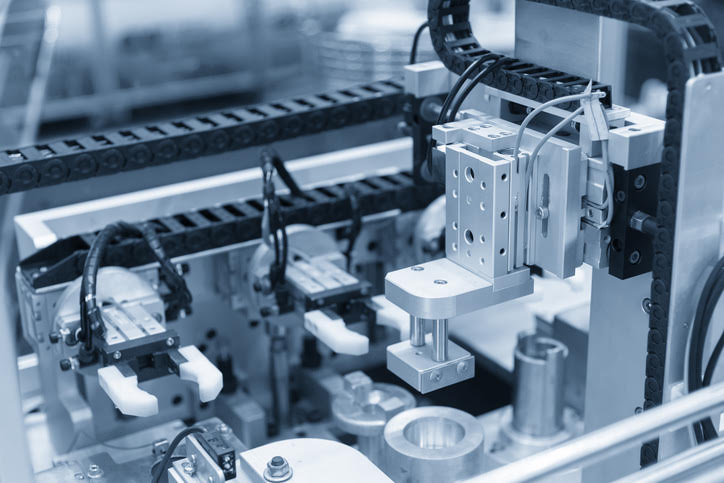
With the rise of advanced robotics, electric actuators, and smart factory technologies, some manufacturers have begun to question whether pneumatic automation still has a place in modern production environments. As factories increasingly adopt digital control systems and precision automation, it is natural to wonder if compressed air technologies will eventually be replaced.
However, from a production factory perspective, pneumatic systems remain one of the most practical and widely used automation solutions on the factory floor.
Why Pneumatics Still Play a Key Role in Manufacturing
In many production facilities, automation solutions must meet several critical requirements: speed, reliability, simplicity, and cost efficiency. Pneumatic systems continue to meet these needs effectively.
Compressed air is readily available in most factories, and pneumatic components such as cylinders and valves are simple, robust, and easy to maintain. This makes them highly suitable for high-volume production environments where equipment must operate continuously with minimal downtime.
For tasks such as clamping, sorting, pick-and-place operations, and packaging, pneumatic actuators provide fast and repeatable motion without complex control systems.
Practical Advantages on the Production Floor
From a factory operations standpoint, pneumatics offer several practical advantages:
- High operating speed for repetitive tasks
- Durability in harsh industrial environments
- Lower initial investment compared to many electric systems
- Simple installation and maintenance
Because of these characteristics, pneumatic systems remain a preferred solution for many machine builders and plant engineers.\
When Electric Automation Makes More Sense
While pneumatic systems are highly effective for many applications, electric actuators are increasingly used where precision and programmable motion control are required.
Industries such as semiconductor manufacturing, robotics, and high-precision assembly often rely on electric automation because it allows accurate positioning and detailed motion control.
Rather than replacing pneumatics entirely, electric technologies are often used alongside pneumatic systems in modern automation setups.
The Reality in Most Factories
In practice, most manufacturing facilities operate hybrid automation systems. Pneumatic components handle fast, repetitive mechanical tasks, while electric systems manage precision positioning and complex control functions.
This combination allows factories to achieve both efficiency and flexibility without significantly increasing system complexity or cost.
Looking Ahead
As manufacturing continues to evolve, pneumatic technology is also improving. New developments such as energy-efficient air systems, smart sensors, and digital monitoring are helping pneumatic solutions integrate more easily into Industry 4.0 environments.
From a production factory perspective, pneumatics are unlikely to disappear. Instead, they will continue to serve as a reliable and cost-effective backbone for many automation processes.
Conclusion
While automation technologies are advancing rapidly, pneumatic systems remain highly relevant in modern manufacturing. Their simplicity, durability, and efficiency make them indispensable for many factory operations.
Rather than becoming obsolete, pneumatic automation will likely continue to work in partnership with electric and digital technologies, supporting the next generation of smart and efficient production systems.

