

Why Pneumatic Valves Fail in Industrial Automation?
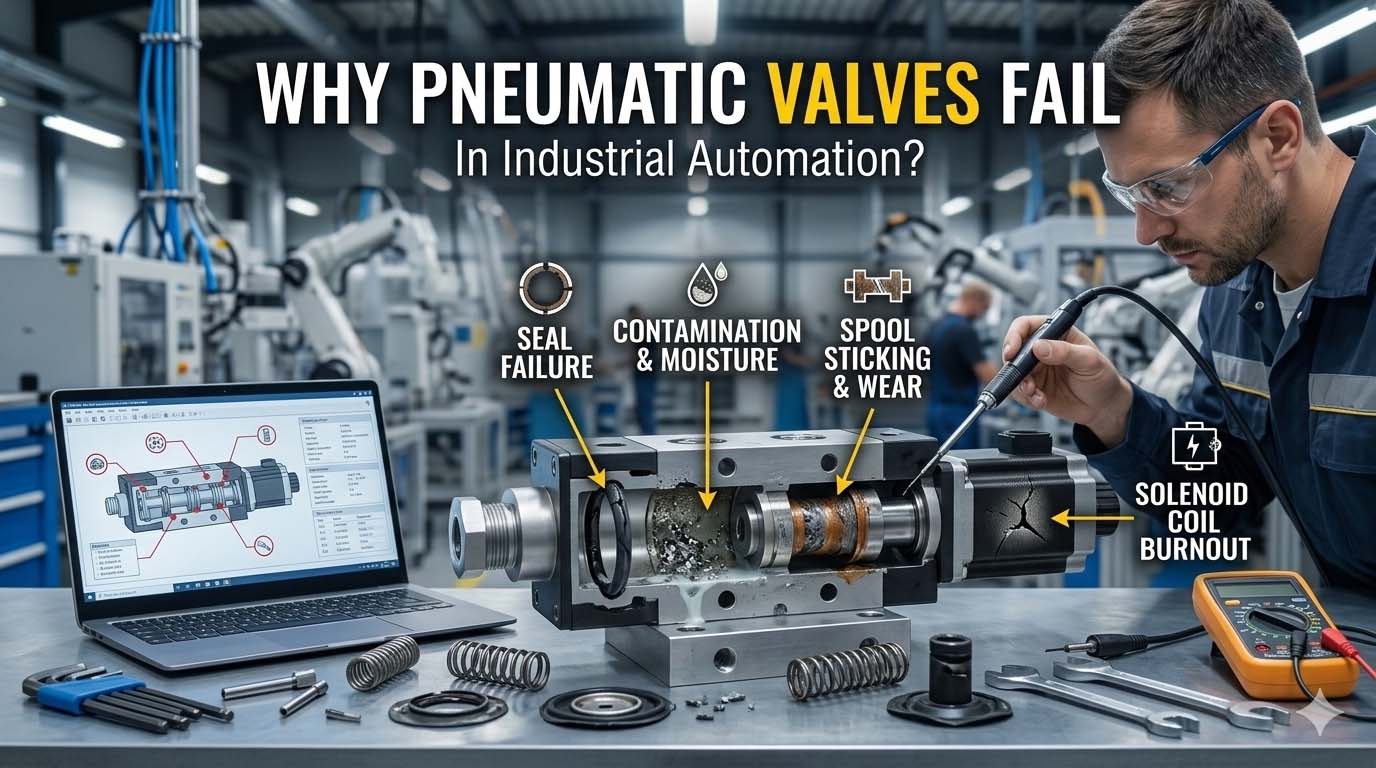
Pneumatic valves are essential components in industrial automation systems. They control the direction and flow of compressed air that powers cylinders and actuators. When a valve fails, machines may stop unexpectedly, operate slowly, or behave inconsistently, leading to costly production downtime.
Understanding the common causes of pneumatic valve failure can help engineers and maintenance teams prevent problems and maintain reliable system performance.
1. Contaminated Compressed Air
Dirty compressed air is one of the most common causes of valve failure. Dust, oil residue, rust particles, and other contaminants can enter the valve and damage internal components such as seals and spools.
Prevention: Use proper air filtration and maintain air preparation units such as filters and regulators.
2. Moisture in the Air System
Moisture can cause corrosion inside pneumatic valves and pipelines. Over time, this can damage internal components and affect valve performance.
Prevention: Install air dryers and regularly drain condensate from air receivers and pipelines.
3. Electrical Issues in Solenoid Valves
For solenoid valves, electrical faults can prevent the valve from switching properly. Common issues include burnt coils, incorrect voltage supply, or loose wiring.
Prevention: Check electrical connections regularly and ensure the correct voltage is supplied to the valve.
4. Excessive Pressure
Operating a valve beyond its rated pressure can damage seals and internal mechanisms, leading to air leakage and reduced performance.
Prevention: Use pressure regulators and ensure the valve specifications match the system requirements.
5. Wear and Tear from Continuous Operation
In high-cycle automation systems, valves operate thousands or even millions of times. Over time, internal parts may wear out, leading to slower response or leakage.
Prevention: Implement regular maintenance schedules and replace worn components when necessary.
Conclusion
Most pneumatic valve failures are caused by preventable issues such as contaminated air, moisture, electrical faults, or improper system pressure. By maintaining clean compressed air and following proper maintenance practices, manufacturers can significantly improve the reliability and lifespan of pneumatic valves in industrial automation systems.

