

Is Your Production Line Ready for the Year-End Production Rush?
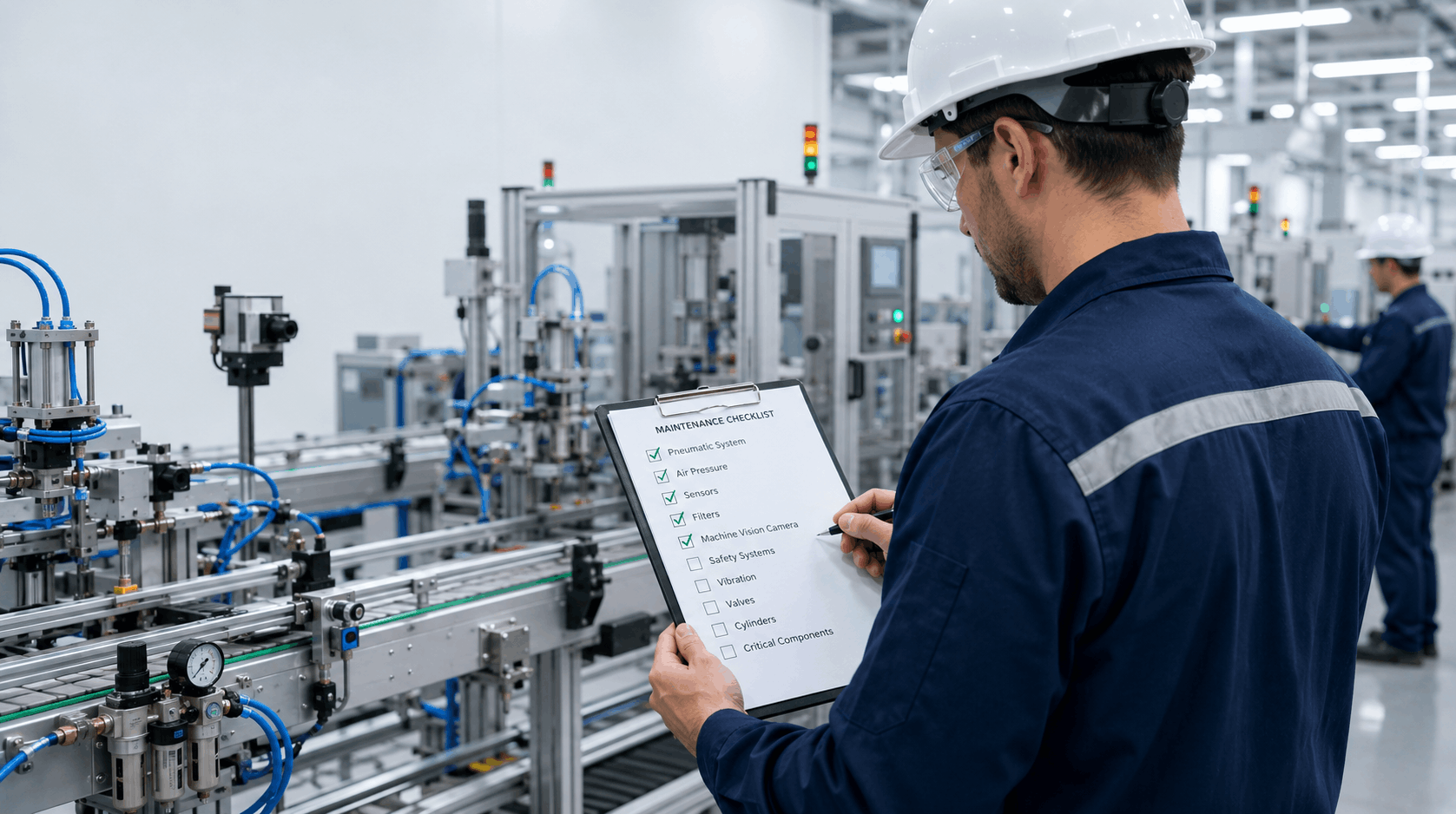
As the final quarter approaches, many manufacturers begin preparing for higher production targets, tighter delivery schedules, and increased equipment utilisation.
When production demand rises, machines that perform reliably under normal conditions may suddenly begin showing signs of stress. A small air leak, ageing sensor, clogged filter, or inconsistent actuator that seemed insignificant earlier in the year can quickly become a production bottleneck.
Before increasing output, September is a good opportunity to check whether your production line is ready for the year-end production rush.
1. Check Your Pneumatic System
Higher production volumes usually mean more machine cycles, placing additional demand on pneumatic components.
Before ramping up production, check for:
- Air leaks around tubing and fittings
- Unstable operating pressure
- Slow or inconsistent cylinder movement
- Worn valves and seals
- Clogged air filters
A pneumatic system that performs adequately at normal production levels may struggle when cycle frequency increases.
Ensuring sufficient air pressure, flow, and proper air preparation can help maintain consistent machine performance during periods of higher demand.
2. Verify Your Sensors and Instrumentation
Automated production lines depend on sensors to provide accurate information about machine and process conditions.
Pressure, temperature, flow, proximity, and other sensors should be inspected to ensure they continue to provide reliable readings.
Small measurement errors can affect process control without immediately triggering an alarm. Where necessary, instrumentation should be calibrated or replaced before entering a critical production period.
Reliable measurement solutions from Omega Engineering and Dwyer can help manufacturers maintain visibility over important process conditions.
3. Make Sure Inspection Can Keep Up
Increasing production speed is only useful if quality inspection can maintain the same pace.
Manual inspection may become more challenging as production volume increases, particularly when operators are required to inspect repetitive products over long shifts.
Machine vision solutions from Cognex can automate tasks such as:
- Defect detection
- Product orientation checks
- Component verification
- Barcode and Data Matrix reading
- Label inspection
Automated inspection helps maintain consistent quality without creating another bottleneck on the production line.
4. Look for Signs of Excessive Vibration and Impact
Increasing machine cycle rates can also increase vibration, impact forces, and mechanical stress.
Pay attention to unusual:
- Vibration
- Noise
- Movement
- Impact at end-of-stroke positions
- Wear around moving components
Proper vibration isolation and energy absorption can help protect equipment, maintain positioning accuracy, and extend component life, particularly in high-speed automation applications.
5. Review Critical Components and Spare Parts
One small component can stop an entire production line.
Before a high-demand period, maintenance teams should identify components that could create significant downtime if they fail, including sensors, pneumatic valves, cylinders, regulators, and other frequently cycled parts.
Having the right replacement components available can significantly reduce recovery time when an unexpected failure occurs.
Don’t Wait Until Production Is at Full Capacity
The best time to discover a weak component is not when the production line is already operating at maximum capacity.
A pre-Q4 inspection gives maintenance and production teams an opportunity to identify small problems while there is still time to address them.
Check pneumatic performance. Verify sensor accuracy. Inspect filters. Review machine vision systems. Look for abnormal vibration. Make sure critical components are ready for increased utilisation.
Conclusion
Preparing for higher year-end production is not simply about running machines faster. The entire automation system needs to remain reliable as production demand increases.
By reviewing pneumatic systems, instrumentation, inspection equipment, vibration control, and critical components before ramping up production, manufacturers can reduce the risk of unexpected downtime and maintain consistent product quality during the busiest months of the year.
Contact our automation specialists to ensure your production systems are ready for increased year-end demand.

