

How AI and Smart Sensors Are Changing Industrial Automation
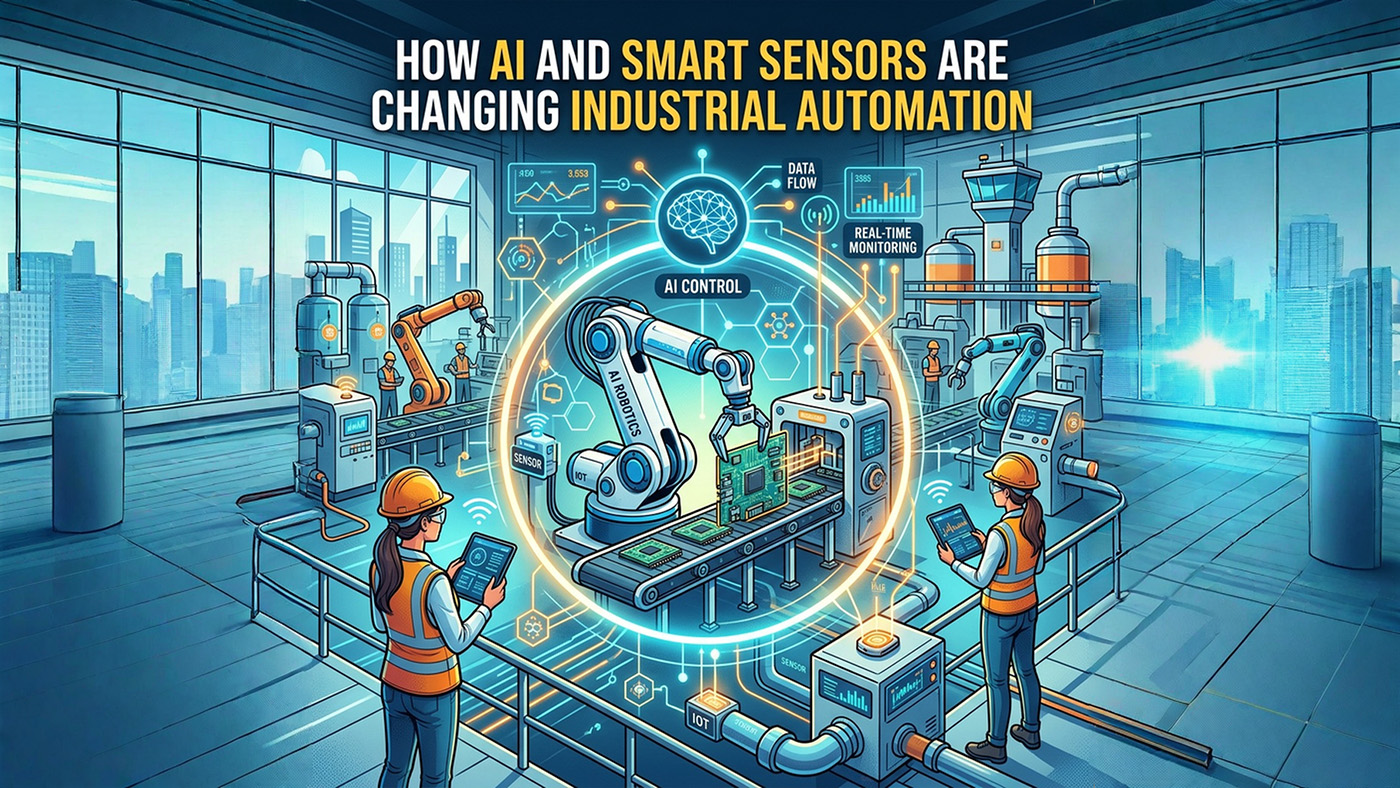
Industrial automation is evolving rapidly as factories move toward smarter, more connected production environments. Technologies such as Artificial Intelligence (AI), smart sensors, and real-time monitoring systems help manufacturers improve efficiency, reduce downtime, and make faster operational decisions.
While traditional automation systems focused mainly on mechanical operation and control, modern factories increasingly use data and intelligent monitoring to optimise performance across the production floor.
The Rise of Smart Manufacturing
In today’s Industry 4.0 environment, machines are no longer operating independently. Production equipment, sensors, and control systems can now communicate and share data in real time.
This allows manufacturers to monitor:
- Machine performance
- Air pressure and flow rates
- Temperature and vibration
- Production efficiency
- Equipment health
With AI-powered analysis, this data can be used to identify patterns, detect abnormalities, and predict potential failures before they occur.
How Smart Sensors Improve Automation
Smart sensors play a key role in modern industrial automation. Unlike traditional sensors that only provide basic readings, smart sensors can continuously transmit data to monitoring systems or PLCs.
Common applications include:
- Pressure monitoring in pneumatic systems
- Temperature monitoring in process automation
- Differential pressure monitoring for filters and airflow
- Flow monitoring in fluid systems
Solutions from Omega Engineering and Dwyer Instruments are commonly used in industrial environments where accurate measurement and monitoring are critical.
For example:
- Pressure sensors can detect abnormal pressure drops
- Differential pressure sensors can identify clogged filters
- Temperature sensors can help prevent overheating
This allows maintenance teams to respond before equipment failures affect production.
AI and Predictive Maintenance
One of the biggest advantages of AI in industrial automation is predictive maintenance.
Traditionally, factories rely on scheduled maintenance or manual inspections. However, AI systems can analyse sensor data continuously and detect early warning signs such as:
- Irregular airflow
- Pressure fluctuations
- Increased vibration
- Temperature instability
Instead of waiting for equipment to fail, maintenance teams can take action earlier, reducing:
- Unplanned downtime
- Production losses
- Emergency repair costs
This is especially valuable in pneumatic and process automation systems where even small issues can affect overall production efficiency.
Better Energy Efficiency Through Data
Compressed air systems are known to be one of the highest energy consumers in many factories. AI and smart monitoring systems can help manufacturers identify:
- Air leaks
- Pressure inefficiencies
- Excessive energy consumption
- Unnecessary system loading
By analysing real-time operating data, factories can optimise system performance and reduce operational costs.
Human Expertise Still Matters
Although AI and automation technologies are becoming more advanced, human expertise remains essential. Engineers and technicians are still needed to:
- Interpret operational requirements
- Troubleshoot complex issues
- Maintain equipment
- Improve system design
AI should be viewed as a tool that supports better decision-making rather than replacing industrial expertise.
The Future of Industrial Automation
As factories continue to adopt Industry 4.0 technologies, the combination of AI, smart sensors, and industrial automation will become increasingly important.
Manufacturers that invest in intelligent monitoring and data-driven maintenance strategies will be better positioned to:
- Improve productivity
- Reduce downtime
- Enhance process reliability
- Increase operational efficiency
By integrating reliable instrumentation solutions from companies like Omega Engineering and Dwyer Instruments, factories can build smarter and more resilient automation systems for the future. Contact our sales specialists to discover how you can improve your process efficiency and performance.

